

REPLAY: How to include kids without centering them at intergenerational gatherings
6 tiny moves that build a village + a Heat Cheat Sheet just for you

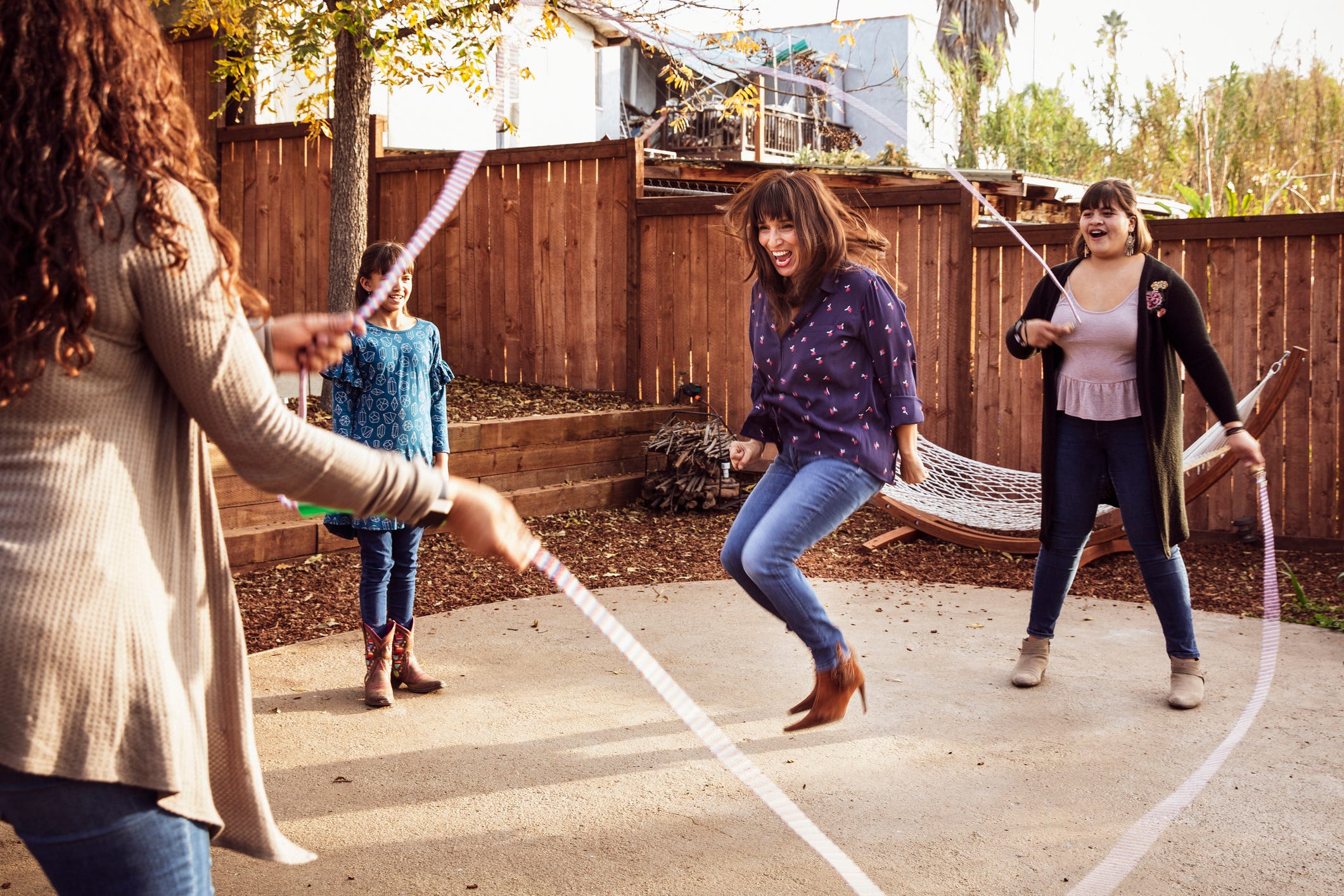
I recently asked Group Lifers what you’re grappling with, and Octavia wrote this:
“I’m in a season of gathering with lots of kids ages 6 to 16. I keep saying ‘adults only,’ but I actually want multigenerational gatherings that include kids, don’t destroy my house, and still let the adults relax. I’ve hired help, planned stations, even had my 9-year-old ‘host’ the kids. And it feels like both too much and not enough. Please help.”
If you’re heading into the holidays and thinking, yes, that!, you’re not alone. Which is why I was stoked to take on intentional cross-generational connection in this week’s GROUP HELP Session. It might have even been my favorite one so far (🤫).
Gathering intergenerationally can be complex. And by “intergenerational,” I don’t just mean grandparents and toddlers. I mean the very real reality of adults in their thirties to fifties raising 5- to 20-year-olds who want to actually participate in a gathering without spending the whole time chasing their children, and adults without children who are also very up for connection and relationship to young people.
When we assume adults don’t want to engage with kids, or that kids can’t meaningfully engage with adults, everyone loses. Parents end up exhausted and isolated, adults without kids hang on the sidelines, and young people aren’t met by the wider community. When we create small on-ramps for kids to rise to the occasion, and small invitations for adults to have a great interaction with a young person, the community also becomes both more alive, and more sustainable.
I’m sharing a write-up of the GROUP HELP Session here as a cheat sheet. Watch the full webinar below to build the skills and get lots of ideas about how to actually do this.
Six tiny, doable, surprisingly effective moves that help kids be part of the gathering without becoming the gathering itself
1. Give kids a meaningful role they can do self-sufficiently — one that’s fun, they’re capable of, and generative to the group.
A meaningful role is a real contribution a kid can do with pride, mostly on their own, and helps the group. We practiced this together with a real scenario: After reading my essay on this topic this fall, a woman wrote to me about taking her 12-year-old daughter to a National Charity League meeting. She didn’t want her daughter silently parked in the corner, but she also didn’t want to make the meeting about her. So I asked GROUP LIFERS in the chat to advise this parent: What could the daughter do that’s pro-social, generative to the gathering, and not annoying to the adults? Folks got a chance to think about practically what they would do, or suggest she do. What did the woman end up doing? She handed her daughter a small reporter’s notebook and invited her to ask members one simple question, “Why did you join?” She told me that her daughter learned a ton about what this thing was and why it mattered to her mother and that people were delighted by her question.
2. Practice conversational attunement. Give kids hooks to follow along.
Kids don’t always need their own separate conversation. Often they just need one small hook or one bit of context so they can stay connected instead of drifting into boredom or chaos. I was recently at a friend’s house talking to her about her flour business. I could see my seven-year-old drifting off, even though I knew this would be an interesting conversation for her. I paused and asked her if she got what we were talking about. When she said no, I gave a quick on-ramp. I reminded her of cookies we’d baked with our friend’s flour, the farmer’s markets we’d attended, and then explained how she now had to figure out how to get six local bakeries to use her local flour instead of the corporate flour they use. “How do you convince six bakeries to change their flour?” And then I let the adult conversation keep moving. The point isn’t to make it kid-centered, it’s to make it followable.