


Last weekend, I took my kids to Florida to visit my elderly father. It’s been a busy few months in our family, and so I was acutely aware that this quick trip was happening on what my dear friend calls “borrowed time” — a rare moment to slow down and focus on what’s meaningful amidst the relentless pace of life.
My father is reaching a point where it’s not always easy for him to follow what’s going on at a busy table with lots of talking. So as we were preparing to eat dinner at my step-sister’s house, I was doing what I’m always doing: thinking about how I could make this dinner just a little bit more meaningful for everyone involved.
My step-sister had done a lot of the work for us, with a beautiful spread of long-simmering bolognese, her famous marinated red peppers, marcona almonds, and a cheese board. Everyone was feeling festive based on her hospitality alone. But right before we served up, I stealthily asked her if she’d be up for me posing a Magical Question at the dinner table. She obliged.
As longtime Group Lifers will know, a Magical Question is a question that everyone in your group would be interested in answering as well as interested in hearing each other’s answers. They are one of my favorite tools to create connection across differences. (Peak at a list of 40 such questions here.)
In thinking of a question that could include three kids under 12, a few 40-somethings, and my 78-year-old father, I landed on this: What is something specific your mom or your dad did for you as a kid that made you feel really loved?
To my surprise, my father looked straight up with his big blue eyes and said, “I have an answer.” He quickly recalled when his father taught him how to ride a bike, remembering his father’s patience and even rattling off the address of the house where it happened. (An address I didn’t actually know and wrote down so we’d have it.)
He didn’t stop there. He launched into another story, wherein he got in trouble for talking too much at school, apparently a common occurrence. As was also common at the time, the teacher struck him on the head with a ruler, a metal-lined ruler. Apparently she hit him hard enough to draw blood, much to my kids’ horror.
Well, that same day, my dad recalled, my grandfather, Lyle Parker, marched up to the school to give the teacher a piece of his mind. The teacher, embarrassed and deeply apologetic, ended up inviting the entire family over to her farm for brunch.
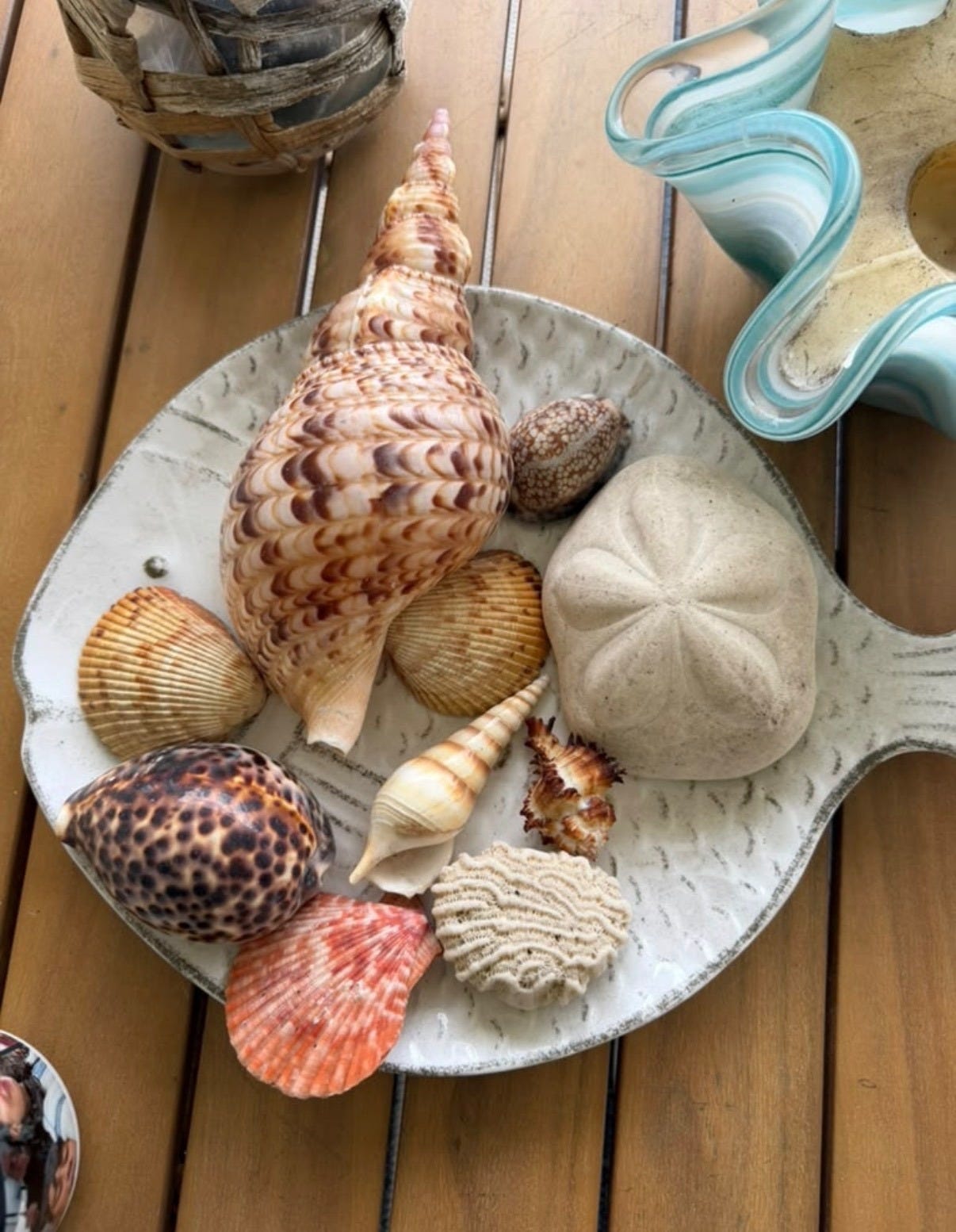
Readers of The Art of Fighting might remember Lyle Parker as the man who never fought; he was the patriarch of the conflict-avoidant lineage to which I belong. Sent to the South Pacific with the Navy during World War II, Lyle returned with a suitcase full of seashells he collected while walking along the shore. He was, according to family lore, as well as my own memory of him, literally a gentle man.
So needless to say, hearing this story for the first time — one where this same man stood up for his family in such a profound and overt way — was a little bit shocking to me. The story challenged my own sense of my family’s narrative: that we’re so conflict-avoidant I turned into a conflict facilitator to make up for it.
The evening continued that way, with everyone sharing their answer: My brother-in-law recalled being bought his first guitar as a kid, and feeling so deeply seen as a result. My son said it’s when he gets to crawl into bed with his dad to watch Seinfeld. My story was when my dad spent five days in a row catching my practice pitches before a big softball game in middle school. When I pitched a perfect game, everyone thought it was some kind of miracle; I knew it was just my dad.
Even though I do this for a living, I was surprised by how much this Magical Question brought forth. The question was simple but framed in a purposeful way. It was equalizing, in that it asked all of us to inhabit the identity of a child. It also had legs — it led to other stories and insights about our family’s past and present.
As a facilitator, my job, my training, and my craft are to help people create meaningful connections despite obstacles. And close readers of my work may know that one of the farthest points of connection in my life is my father. At the same time, he is also one of the most important relationships.
The strongest groups — and that includes families — are ones that learn how to come through their fights, to weave the story of their conflicts and rifts into their family myths and origin stories. And that’s what my father managed to do at that dinner table. Hearing how Lyle Parker stood up for his family not only widened my understanding of my grandfather, but also what Parkers do.
Part of what animates my work, and indeed this newsletter, is to share the skills I use as a facilitator and make them feel relevant to your daily life and groups. And this dinner was a reminder that the best laboratory for building those skills is often how we spend our simplest moments together, with the people we love, on borrowed time.
As always,
Priya
P.S. Join me next Friday, October 30th at 12 pm ET for a Substack Live with Jack Shitama, author of If You Met My Family, You’d Understand. I love this book and recommend it to so many people. We’ll talk about how to be in community and navigate difference while still being in relationship with each other. In all groups, part of individuation is showing up when you think differently than the “surrounding togetherness pressure” and still being both yourself and connected to the people around you. The tool he uses: non-anxious presence. It’s a total game changer. Add to your calendar here. Substack Live conversations are free and open to all. I’ll share the replay with paid subscribers.
Priya, as you know, I work with families during the weeks and hours before a death — sitting with them while they keep vigil, helping them be present when presence is the whole job.
I read this and immediately thought: these properties — equalizing, specific, has legs — are exactly what's missing from almost everything we hand families at the bedside.
We give them timelines and checklists and what-to-expect guides. We almost never give them a way back in to the person.
So I took your framework and drafted five Magical Questions for a family handout I use in my practice. The one that surprised me most in testing:
*What is something specific you did for me that I may not have ever thanked you for?*
It flips the direction. Instead of asking the dying person to give something, it invites them to receive. People who haven't spoken much in days find words.
Thank you for naming what makes a question work. I'd been doing some version of this intuitively for years. Now I can teach it. 💙
I will use it tonight with my own dad and step mom who I am visiting for some “borrowed” time amid some health stuff. His long term memory is how we connect now. Thank you. 🙏