


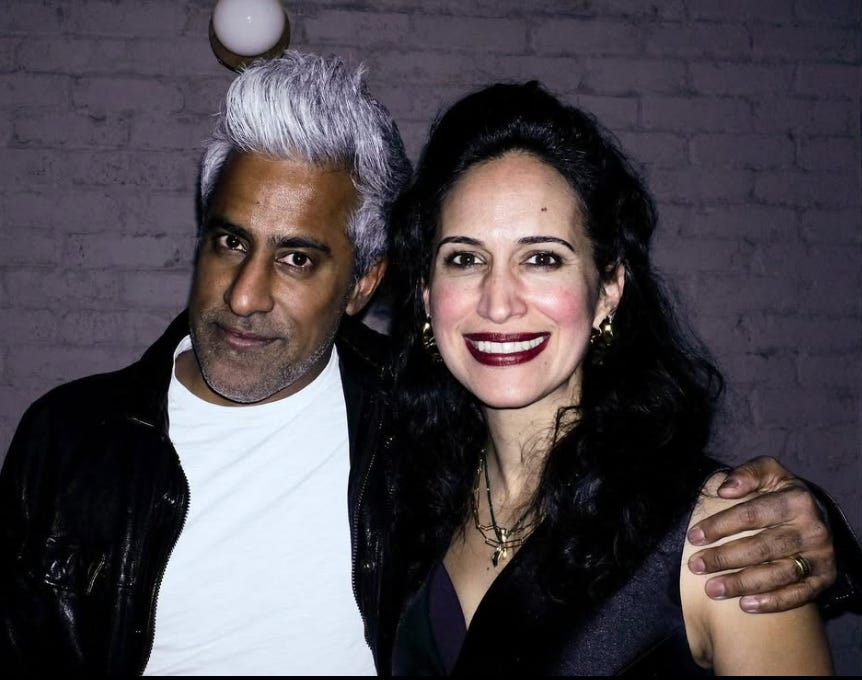
A little over a year ago, my husband and I received an intriguing invitation. Would we come to a room fully outfitted for the highest quality of sound, and bring three songs that have deeply shaped our writing or work in some way, to play for a room of strangers?

The event was called Verses in Vinyl. It was part of a new series Host and Director of Experiences, Cornelius Byrd, was trying one evening a month with the owner, Yuji Fukushima, at ALL BLUES. It was inside one of the first listening rooms in America. We were game.
Over the past few years, I have been watching and very much enjoying the rise of so-called listening rooms (sometimes called “hi-fi bars”) in the United States. Like many cool trends, you may not be surprised to learn that listening rooms first popped up in Japan. Called “ongaku kissas,” the first listening room was started in Shibuya, Tokyo in 1926, and then they had a resurgence in the 1950s and 60s. They were specific places with a specific purpose: for young people to gather and listen to often prohibitively expensive vinyls of American jazz music on high quality speakers. And, they are now having a moment in the U.S.
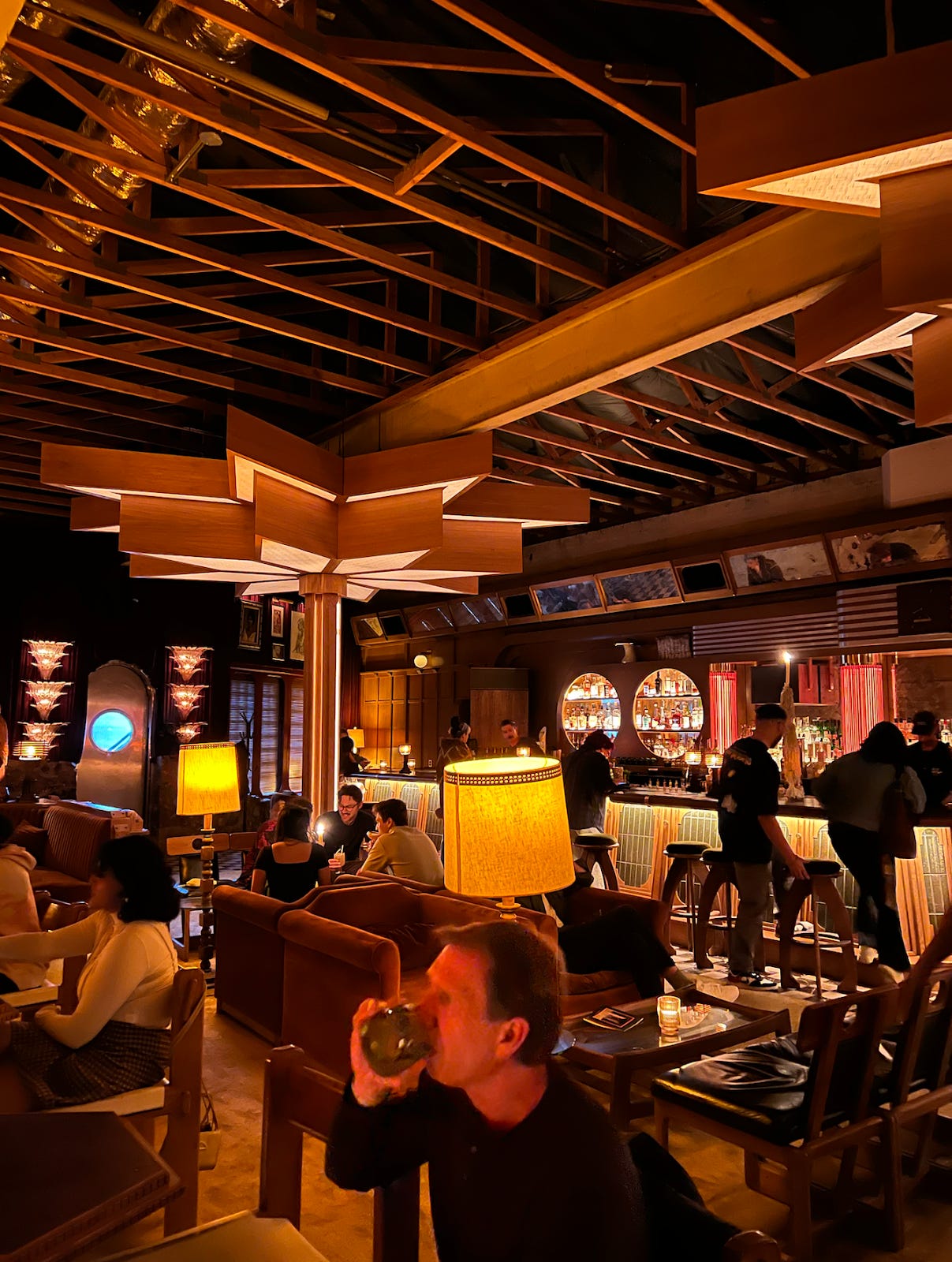
In the past few years, especially after the pandemic, people have been looking for ways to gather that are more analog and low-key, rather than at nightclubs. Listening rooms are taking off.
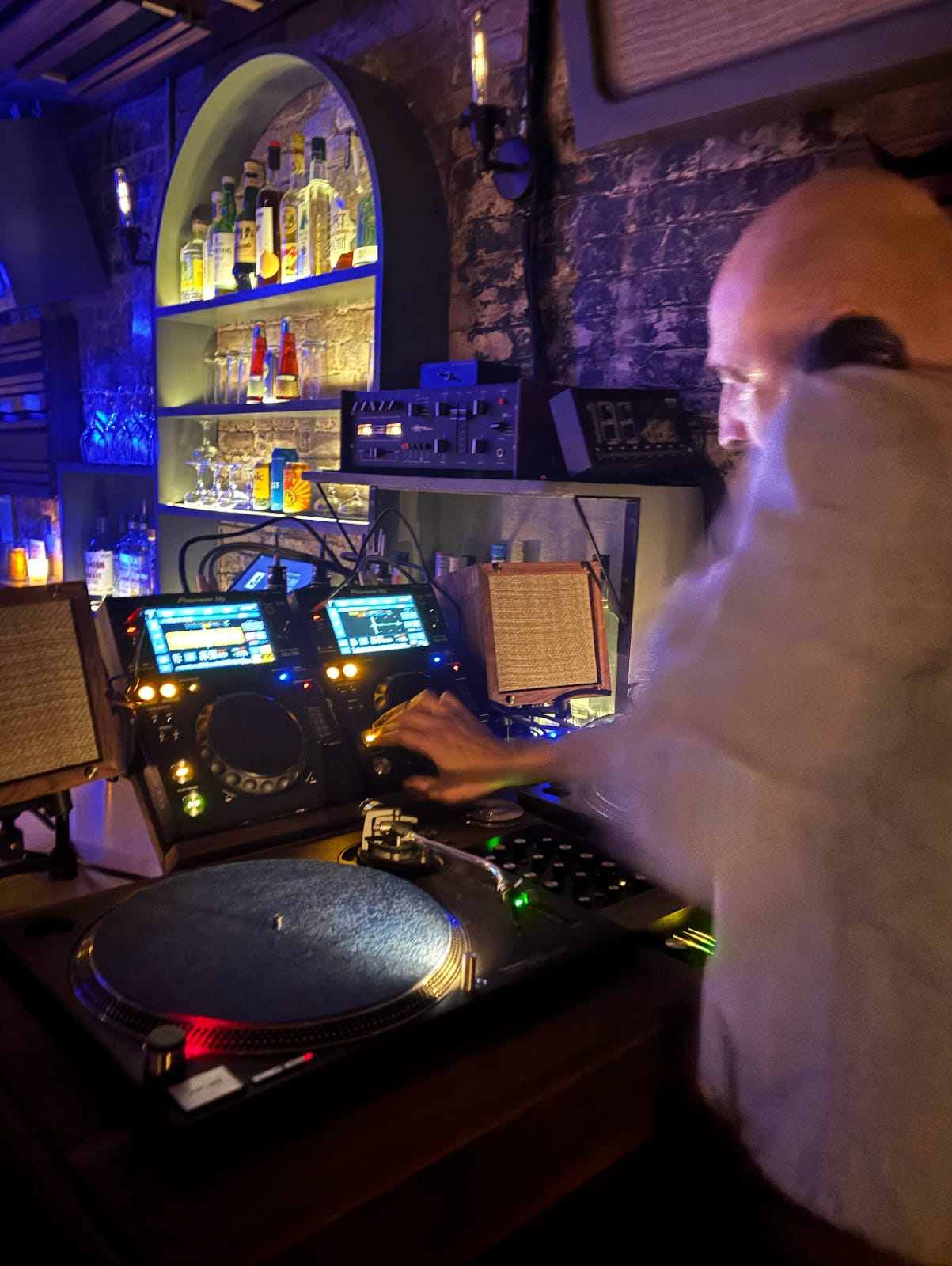
Here’s the idea: you go to a listening room to listen to music at the highest sound quality played for you by a DJ curating an audio experience for the room – often on vinyl. But unlike a restaurant, the music is the foreground. And unlike a club, it’s not to dance. It’s to have a shared listening experience with other people that you don’t control.
Some hi-fi bars sell vinyls. Some are connected to restaurants where you can have a drink or a meal before or after. Others are simpler. But the most hardcore listening rooms are deeply clear on their purpose. And yes, dear reader, that purpose is specific and disputable. You are really there to listen. To hear a real human play a vinyl on speakers you could never afford—or fit—into your apartment. And to be there for the journey of it all.
I’ve now been to listening rooms in San Diego, a half dozen or so in New York City, and a friend of mine even opened one in Atlanta. And one I kept returning to, again and again, is All Blues.
The first time I entered the inner chambers of All Blues, I gasped. A DJ friend told me about its opening, and I went solo one evening to check it out. The door is hard to find. (Cornelius will tell you to look for the door under the “Soul” sign.) It’s not entirely clear what it is. On the left as you enter, is a sort of coat-hanging area stocked with old jazz vinyls. Through one room is a gorgeous bar (for those who want to talk). And then, past a thick velvet room, is the actual listening room. And, like many listening rooms, it is visually stunning.
It is tiny, cozy, and beautiful. On the far wall is the DJ, spinning on German turntables, set up like an altar. To the right of the entrance, are three giant speakers elevated on a small stage, and photos of Prince and Louis Armstrong and others. Around the top of the room is a library of vinyls that you could presumably climb up to on a custom-made wooden ladder attached to the wall. There are a few tables on the left wall where you can sit and eat, but all chairs in the room are turned to face toward the speakers, not each other. The rest of the room are two rows of arm chairs, turned towards the speakers, as if beach chairs facing the ocean.
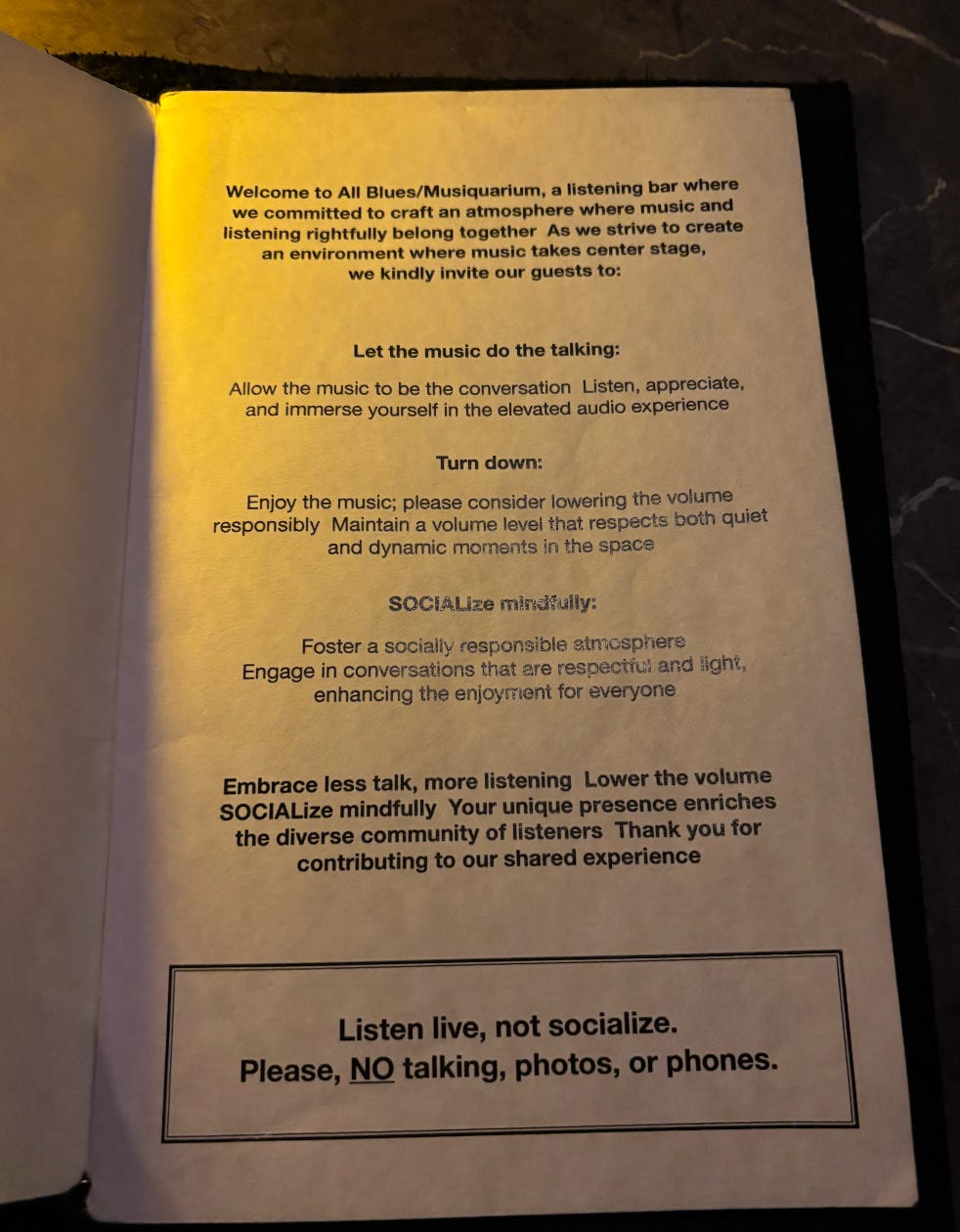
The place has a purpose (“crafting an atmosphere where music and listening rightfully belong together”). It knows what it is. And it educates and shapes its guests into how to be. Before you even see the drinks or food, the menu has a set of rules: “embrace less talk, more listening, lower the volume, and socialize mindfully.”
As a host, Byrd embodies what I call generous authority. He uses his powerful presence to guide each guest, explain their ethos, and then, yes, when necessary, enforce the rules. In The Art of Gathering, I explain that every gathering is about connection, but it’s also about power. And we often under-host for all sorts of reasons. When you are attempting to do something different, part of your responsibility as a host is to help your guests understand and practice different norms in order to enter and participate, and ultimately enjoy, a temporary alternative world. And the role of the host is to also practice that generous authority, which is to use your power for the good of the guests to help the gathering achieve its purpose.
And Cornelius does just that. I’ve been hushed by Cornelius multiple times, as I was still learning the ways of the listening room. (I now know not to go to All Blues when I’m wanting to catch up with a friend. It’s not for that.) Once you get through the discomfort, it’s a bit of a relief not to have to talk.
Listening rooms are specific and disputable. You can’t talk there. If your table gets too loud, he will come and invite you to go to the bar, instead. But he does so by reminding us of the purpose of the place: to have a shared experience of sound in community together.
The night of Verses in Vinyl, I was nervous. I thought a lot about what three songs I wanted to bring. I had 30 minutes, and ended up sharing three songs:
An anthem to gathering: Come Along by Cosmo Sheldrake (if you listen to the lyrics, you will understand why)
A song I listen to before a particularly tense or high-stakes facilitation: Raindance by Jon Batiste (feat. Native Soul)
A song that came to me in a dream one night. I didn’t even know what it was, but I was singing the lyrics as I woke up. I googled the words, and it turned out to be All Out of Love by Air Supply. I listened to the song for weeks, and couldn’t totally figure out why it was calling to me so deeply. I was in the middle of re-writing the last section of my new book, and was a bit stuck. As I listened to this song on loop, it suddenly dawned on me: the frequency of the song was what I needed to write from. And, through that process I found the emotional center of my new book (yes, that book!)
I now go to listening rooms to discover new music. I go to be with other people who also want to listen to music. I go get off my phone. I go to ease my nervous system. I go to be held and guided and protected (and yes sometimes shushed!). I appreciate the deep work these hosts are engaged in to remove the many blockages we have that prevent us from really listening to and appreciating music. And, like the best gatherings, it’s something I wouldn’t know how to do or access on my own.
Warmest,
Priya
P.S. As part of our new series THE BREAKDOWN, Cornelius Byrd himself, will be joining us LIVE tomorrow, Wednesday, March 4th at noon EST on Substack to talk to us about the anatomy of a listening room, and what he has learned as a generous, grounded host that is guiding people to experience something they don’t yet know how to. Join us tomorrow here. The LIVE is open to all while it’s happening. I’ll share the replay with Group Lifers (aka paid subscribers) following the conversation. Become a Group Lifer here.
thank you so much for sharing!
Hi Priya. I'm very sorry I missed this conversation! As a paid subscriber, is there a way to get access to the recording?